

By Dr. Chomba Chuma, MD & Founder, Her-Biotics | August 3, 2026
If you've ever unbuttoned your jeans by lunchtime, spent a Sunday curled around a hot water bottle waiting for a bloating episode to pass, or felt the low-grade anxiety of never knowing when your gut was going to cooperate — you are not alone, and you are not imagining it.
Digestive dysfunction is one of the most underdiagnosed and undertreated areas of women's health. An estimated 10–15% of the global population lives with Irritable Bowel Syndrome (IBS), and women are twice as likely as men to receive that diagnosis. Meanwhile, the concept of leaky gut — once dismissed by mainstream medicine — is now backed by a growing body of peer-reviewed research linking increased gut permeability to everything from autoimmune disease to anxiety.
I became a doctor because I wanted to solve problems that matter to real women. And this one matters enormously. In this article, I want to walk you through exactly what's happening inside your gut when bloating, IBS, and leaky gut take hold — and, more importantly, what the science tells us about using probiotics to genuinely repair the damage.
Let's go deep.
Section 1: What's Actually Causing Your Bloating?
Bloating is not simply "eating too much" or "swallowing air." While both of those things contribute, chronic or recurring bloating is almost always a sign that something more fundamental is disrupted in your gut ecosystem.
The Gut Microbiome and Gas Production
Your gastrointestinal tract is home to approximately 38 trillion microbial cells — bacteria, fungi, viruses, and archaea — collectively known as the gut microbiome. When this community is diverse and balanced, your gut ferments undigested carbohydrates efficiently and maintains a smooth rhythm of motility (the muscular contractions that move food through your digestive tract).
When the microbiome is disrupted — a state called dysbiosis — several things go wrong simultaneously:
- Opportunistic bacteria overproduce gas (hydrogen, methane, carbon dioxide) during fermentation
- Gut motility slows, trapping gas and causing distension
- Visceral hypersensitivity develops, meaning your gut nerves become oversensitive to normal levels of gas and pressure
- Intestinal inflammation reduces the efficiency of digestion at the cellular level
For women specifically, fluctuating estrogen and progesterone levels across the menstrual cycle further modulate gut motility and bacterial composition. This is why so many women notice bloating is dramatically worse in the week before their period — it's not coincidence, it's hormonal biology acting directly on your digestive system.
Common Triggers That Worsen Dysbiosis
- Antibiotics (even a single course can disrupt microbiome diversity for up to 12 months)
- Chronic stress (the gut-brain axis is bidirectional — cortisol directly alters bacterial populations)
- Ultra-processed diets high in emulsifiers and artificial sweeteners
- Hormonal contraceptives (evidence suggests these can alter microbiome composition)
- Infections — even a resolved case of food poisoning can trigger lasting dysbiosis
Section 2: Understanding IBS — It's More Than a Sensitive Stomach
Irritable Bowel Syndrome is a functional gastrointestinal disorder, meaning standard tests often return normal results even while a woman's quality of life is significantly impaired. It is characterised by:
- Recurrent abdominal pain or cramping
- Altered bowel habits (diarrhoea, constipation, or both)
- Bloating and visible abdominal distension
- The sensation of incomplete evacuation
Key finding: A landmark 2021 meta-analysis published in Gut journal analysed 53 randomised controlled trials and found that multi-strain probiotics produced statistically significant improvements in global IBS symptoms, abdominal pain, and bloating compared to placebo — with a notably strong effect size for Lactobacillus and Bifidobacterium strains. Read the research
The Gut-Brain Axis in IBS
One of the most important paradigm shifts in IBS research over the last decade is the recognition that IBS is a disorder of the gut-brain axis, not purely a digestive problem. The vagus nerve runs bidirectionally between your enteric nervous system (sometimes called the "second brain" in your gut) and your central nervous system. When your gut microbiome is dysbiotic, it disrupts the production of key neurotransmitters — including 90% of your body's serotonin, which is manufactured in the gut.
This explains why IBS and anxiety so frequently co-exist. They share the same biological highway.
Post-Infectious IBS: A Specific Risk for Women
Research consistently shows that women are more likely than men to develop post-infectious IBS following a gastrointestinal illness. If you've noticed your digestion was never quite the same after a stomach bug, a bout of traveller's diarrhoea, or a COVID-19 infection, this is a recognised and validated clinical phenomenon — not something you're imagining.
Probiotics play a specific role here in recolonising the gut after pathogenic disruption and restoring the competitive exclusion that keeps harmful bacteria in check.
Section 3: The Leaky Gut Epidemic — What the Science Actually Says
For years, "leaky gut" was a term used primarily in functional medicine circles and dismissed by conventional practitioners. That has changed dramatically.
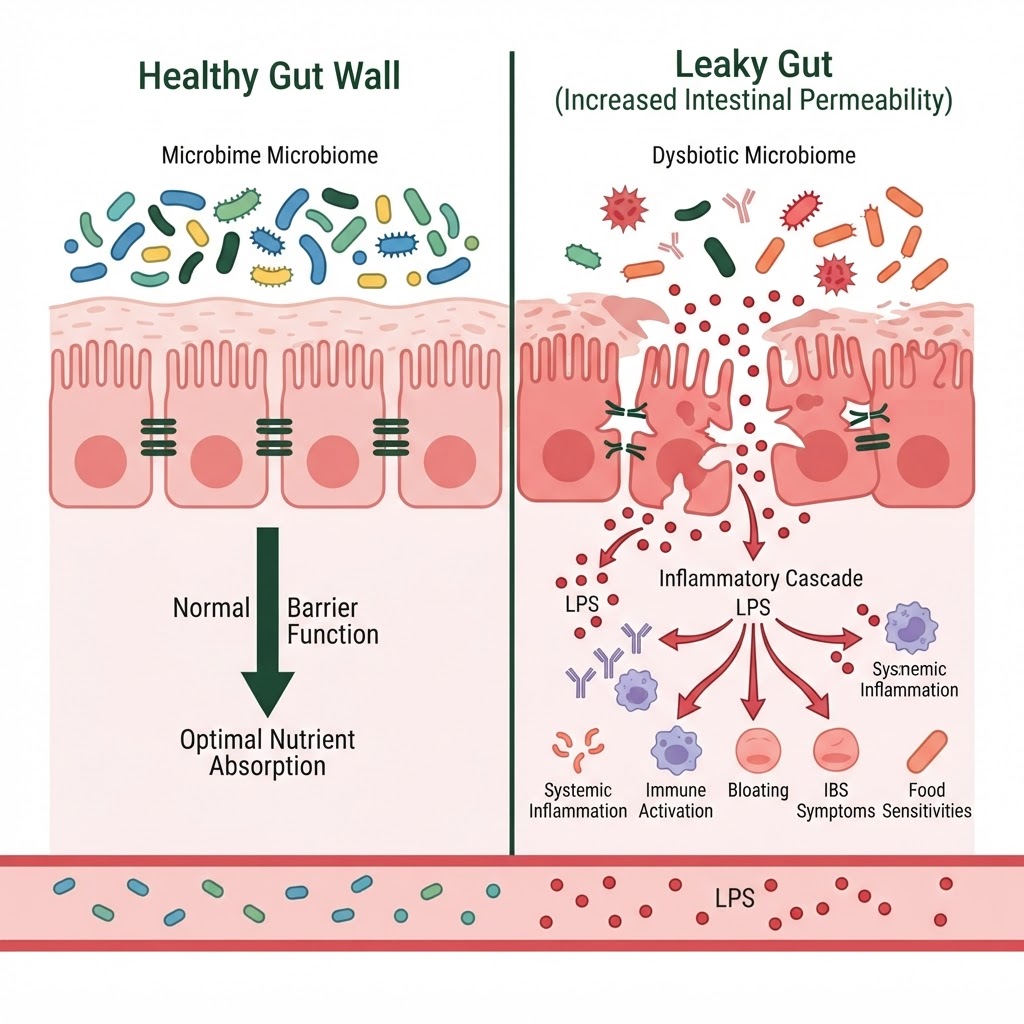
Leaky gut — or increased intestinal permeability — is now a recognised scientific phenomenon supported by hundreds of peer-reviewed studies. The mechanism is well understood: your intestinal lining is protected by tight junction proteins that act as gatekeepers, allowing nutrients through while blocking pathogens, toxins, and undigested food particles.
When the gut microbiome is disrupted, dysbiotic bacteria produce compounds (particularly lipopolysaccharides, or LPS) that degrade these tight junction proteins. The result is a gut wall that becomes increasingly permeable — "leaky" — allowing partially digested proteins and bacterial fragments to enter the bloodstream, triggering a systemic inflammatory response.
Key finding: Research published by the National Institutes of Health demonstrated that increased intestinal permeability is associated with a range of conditions including inflammatory bowel disease, type 2 diabetes, non-alcoholic fatty liver disease, and autoimmune conditions — pointing to leaky gut not as a fringe concept, but as a genuine driver of systemic inflammation. Read the NIH review
Signs Your Gut Permeability May Be Compromised
- Chronic bloating that doesn't resolve with dietary changes
- Food sensitivities that seem to be multiplying over time
- Skin issues — acne, eczema, rosacea (the gut-skin axis is real)
- Brain fog and fatigue not explained by sleep deprivation
- Joint pain and stiffness with no clear rheumatological diagnosis
- Frequent infections or a sense that your immune system is always switched on
How Probiotics Repair Gut Permeability
This is where the science becomes genuinely exciting. Specific probiotic strains have been shown to:
- Upregulate the expression of tight junction proteins (particularly claudin-1, occludin, and ZO-1)
- Produce short-chain fatty acids (SCFAs) — especially butyrate — that serve as the primary fuel source for colonocytes (intestinal lining cells) and actively repair the gut wall
- Compete with and suppress pathogenic bacteria that produce LPS
- Modulate intestinal immune responses, reducing the chronic low-grade inflammation that perpetuates leaky gut
- Stimulate mucin production, thickening the protective mucus layer that lines the gut wall
The critical caveat? The probiotic must survive long enough to do the job. And this is where most supplements fail completely.
Section 4: Why Most Probiotics Don't Work — And What Changes with SCO2 Technology
Here is the uncomfortable truth I tell every patient who comes to me frustrated after "trying probiotics" with no results: the problem almost certainly wasn't the strains. It was the delivery.
The Survival Problem
Your stomach is a hostile environment. Hydrochloric acid in the stomach reaches a pH of 1.5–3.5 — acidic enough to denature most probiotic bacteria before they ever reach the colon where they're needed. Studies have found that conventional probiotic supplements can lose up to 99.9% of their viable bacteria between the moment you swallow the capsule and the moment the contents reach the large intestine.
This means a 10 billion CFU supplement could be delivering as few as 10 million viable organisms — a 1000-fold reduction that makes meaningful clinical outcomes nearly impossible.
How SCO2 Microencapsulation Changes Everything
At Her-Biotics, every formula is built on our patented SCO2 (supercritical carbon dioxide) microencapsulation technology — a process that uses supercritical CO₂ as a solvent to encase each probiotic strain in a seamless, pH-responsive protective shell at the molecular level.
Here is what this means in practice:
- The shell is stable in the acidic environment of the stomach, protecting bacteria completely
- The shell dissolves precisely at the slightly alkaline pH of the terminal ileum and colon — exactly where probiotic action is needed
- No heat is involved in the process, which means bacterial viability is preserved far beyond what traditional encapsulation methods achieve
- The result: 1000× more viable probiotics delivered to the gut compared to standard unencapsulated supplements
This isn't marketing language. It is verifiable, measurable, and it is the reason our formulas produce outcomes that standard probiotics consistently fail to replicate. You can explore the full science behind our technology on our Science Page.
Section 5: Her-Biotics Original — Built Specifically for Gut Repair and Digestive Resilience
When I designed Her-Biotics Original, I had one central question: what would a probiotic formula look like if it were built purely around the science of what women's guts actually need to heal?
The answer is a 16-strain, broad-spectrum probiotic formula that covers every functional territory relevant to bloating, IBS, and leaky gut — delivered via SCO2 technology to ensure every strain actually arrives alive.
The 16-Strain Philosophy
Why 16 strains rather than one or two? Because the gut microbiome is an ecosystem, and ecosystems require diversity. Monoculture approaches produce monoculture results. Different strains occupy different niches in the gut, perform different biochemical functions, and exert their therapeutic effects through different mechanisms:
- Lactobacillus rhamnosus GG — the single most studied probiotic strain in the world, with robust evidence for IBS symptom reduction and tight junction restoration
- Bifidobacterium longum — key producer of butyrate; specifically associated with reduced intestinal permeability in clinical trials
- Lactobacillus plantarum — strong evidence for bloating reduction and visceral pain modulation in IBS
- Bifidobacterium infantis — shown to reduce abdominal distension and normalise bowel habit in IBS-C
- Lactobacillus acidophilus — supports competitive exclusion of pathogenic organisms; enhances mucin secretion
The remaining 11 strains are selected to create a comprehensive ecosystem that supports bacterial diversity, immune modulation, and SCFA production across the full length of the colon.
Synergistic Micronutrients for Gut and Immune Health
Her-Biotics Original is not simply a probiotic — it's a complete gut and immune foundation formula that pairs the 16-strain complex with:
- B-Vitamins (B1, B2, B3, B5, B6, B7, B9, B12): Essential for cellular energy metabolism in the gut lining; B12 deficiency is particularly common in women with dysbiosis
- Vitamin C: A potent antioxidant that reduces oxidative stress in the intestinal mucosa and supports collagen synthesis in the gut wall
- Vitamin E: Protects colonocytes from lipid peroxidation driven by intestinal inflammation
- Zinc: Critical for tight junction protein synthesis; zinc deficiency is directly associated with increased gut permeability in multiple studies
This combination means you are not just adding bacteria to a compromised environment — you are simultaneously providing the nutritional building blocks the gut lining needs to actually repair itself.
Section 6: A Practical Protocol for Healing Your Gut
Probiotics are powerful, but they work best as part of a coherent strategy. Here is the evidence-informed protocol I recommend to my patients dealing with bloating, IBS, and suspected leaky gut:
Phase 1: Foundation (Weeks 1–4)
- Start Her-Biotics Original — take consistently at the same time daily (with or without food — SCO2 technology protects regardless)
- Remove the primary disruptors: ultra-processed foods, artificial sweeteners (particularly sucralose and saccharin), and excessive alcohol
- Introduce fermented foods where tolerated: plain kefir, sauerkraut, kimchi, miso — these act as prebiotic and probiotic synergists
- Prioritise sleep: growth hormone released during deep sleep is one of the most potent gut-repair signals we know of
Phase 2: Nourishment (Weeks 5–8)
- Increase dietary fibre diversity — aim for 30 different plant foods per week (the research of Professor Tim Spector and the British Gut Project demonstrates this number is the strongest single predictor of microbiome diversity)
- Add prebiotic-rich foods: garlic, leeks, Jerusalem artichoke, green banana, oats
- Manage the stress load: chronic cortisol elevation is one of the most damaging forces acting on your gut microbiome — this is not optional
- Consider reassessing medications with your GP — if you are on long-term PPIs (proton pump inhibitors) or NSAIDs, these have significant negative effects on microbiome health
Phase 3: Maintenance and Monitoring (Week 9 onwards)
- Most women begin to notice meaningful improvement in bloating and bowel regularity within 4–8 weeks of consistent probiotic use
- Reassess your symptom load at 8 weeks — if IBS symptoms are severe or worsening, a formal gastroenterology referral is appropriate
- Explore our full educational resource library at the Radiance Hub for ongoing gut health guidance
A Note on Hormonal Connections
If your digestive symptoms are closely tied to your menstrual cycle, you may benefit from combining Her-Biotics Original with our Her-Biotics PMS Support formula, which adds Chasteberry, Evening Primrose Oil, Magnesium Glycinate, and Vitamin B6 to the probiotic base — addressing the hormonal drivers of gut dysfunction at their source. View all formulas at Shop All Formulas.
The Bottom Line
Bloating, IBS, and leaky gut are not character flaws, dietary failures, or things you simply have to endure. They are physiological disruptions with clear mechanisms, clear drivers, and — increasingly — clear solutions grounded in robust science.
The evidence for multi-strain probiotics in resolving IBS symptoms, reducing gut permeability, and restoring a healthy microbiome is stronger than it has ever been. What has historically held probiotics back from achieving their full clinical potential is not the strains themselves — it is the near-total loss of viability before those strains reach the gut.
SCO2 microencapsulation changes that equation fundamentally.
If your gut has been holding you back — from energy, from comfort, from confidence in your own body — it's time to give it the support it actually needs. Her-Biotics Original was designed for exactly this: a comprehensive, scientifically rigorous, women-specific probiotic formula built to survive the journey and deliver real, measurable results where it matters most. Start your gut repair journey today — your gut, your energy, and your future self will thank you.
Dr. Chomba Chuma, MD is a physician and the Founder of Her-Biotics. All content is for informational purposes and does not constitute medical advice. If you are experiencing severe or persistent digestive symptoms, please consult a qualified healthcare professional.
Enjoyed this? Get the next one first.
Science made simple, delivered to your inbox. No spam, unsubscribe anytime.