

Cycle Syncing Nutrition: How to Eat for Your Hormonal Phases and Transform Your Health
By Dr. Chomba Chuma, MD & Founder of Her-Biotics | August 10, 2026
For most of medical history, women's bodies were studied as smaller versions of men's — a framework that ignored one of the most powerful biological rhythms in human physiology: the menstrual cycle. Today, a growing body of research confirms what many women have long sensed intuitively: your nutritional needs, metabolic rate, gut microbiome activity, and hormonal sensitivity shift meaningfully across the four phases of your cycle.
Cycle syncing — the practice of intentionally aligning your nutrition and lifestyle choices to these phases — is not a wellness trend. It is an evidence-informed strategy rooted in endocrinology, nutritional biochemistry, and microbiome science. When you learn to work with your hormones rather than against them, the results can be profound: fewer PMS symptoms, more stable energy, better sleep, clearer skin, and a gut that actually functions the way it should.
Let's walk through exactly what's happening in your body during each phase, what it means for your plate, and how targeted nutritional support — including the right probiotic formula — can amplify every benefit.
Understanding the Four Phases of Your Cycle
Before we dive into food, it helps to understand the hormonal architecture of the menstrual cycle. The average cycle runs 24–38 days, divided into four distinct phases, each governed by a unique hormonal signature.
Phase 1: Menstrual Phase (Days 1–5)
Estrogen and progesterone drop to their lowest levels, triggering the uterine lining to shed. Prostaglandins — inflammatory signalling molecules — rise, causing cramping. Many women experience fatigue, lower pain tolerance, and digestive changes during this time.
Phase 2: Follicular Phase (Days 6–14)
Follicle-stimulating hormone (FSH) rises, stimulating follicle development in the ovaries. Estrogen climbs steadily, peaking just before ovulation. This hormonal environment is associated with improved insulin sensitivity, higher pain tolerance, and sharper cognitive focus. It is, physiologically speaking, a time of growth and renewal.
Phase 3: Ovulatory Phase (Days 14–16)
A surge in luteinizing hormone (LH) triggers the release of a mature egg. Estrogen peaks and testosterone briefly spikes. Energy, libido, and communication skills often feel heightened. Metabolic rate is relatively stable.
Phase 4: Luteal Phase (Days 17–28)
The ruptured follicle becomes the corpus luteum, secreting progesterone — the dominant hormone of this phase. Estrogen also rises again before both hormones fall if fertilisation doesn't occur. This drop triggers the cascade of symptoms many women associate with PMS: bloating, mood changes, food cravings, breast tenderness, and fatigue. Resting metabolic rate increases by approximately 100–300 calories per day during the late luteal phase, according to research published in the European Journal of Clinical Nutrition.
"The menstrual cycle represents a monthly window into a woman's overall health. Nutritional interventions that account for cyclical hormonal fluctuations may offer superior outcomes compared to static dietary approaches." — Barr SI et al., American Journal of Clinical Nutrition, 1995 — concept replicated extensively in modern research
How Your Microbiome Changes Across Your Cycle
Here is something most cycle syncing conversations miss entirely: your gut microbiome is not static across your cycle. Emerging research has established that estrogen and progesterone both influence the composition and diversity of gut bacteria — and, critically, that the gut microbiome influences hormone metabolism in return.
The subset of gut bacteria responsible for metabolising estrogen is now called the "estrobolome." These bacteria produce an enzyme called beta-glucuronidase, which deconjugates estrogen in the gut, allowing it to be reabsorbed into circulation. When the estrobolome is imbalanced — a condition tied to low microbial diversity, antibiotic use, and poor diet — estrogen metabolism becomes dysregulated. This can contribute to estrogen dominance, worsening PMS, and even long-term hormonal conditions like endometriosis and PCOS.
During the follicular phase, rising estrogen has been shown to support greater microbial diversity and short-chain fatty acid (SCFA) production. During the luteal phase, rising progesterone can slow gut motility — contributing to the bloating and constipation many women experience — while simultaneously altering the inflammatory tone of the gut lining.
This is precisely why a high-quality, consistently delivered probiotic is not optional when it comes to hormonal nutrition — it is foundational. Her-Biotics Original was formulated with this cyclical biology in mind, delivering a 16-strain probiotic complex through our patented SCO2 microencapsulation technology, which protects strains through stomach acid to deliver 1000× more viable bacteria to the gut compared to standard supplements. Supporting your estrobolome is continuous work, and Her-Biotics ensures your microbiome receives genuine reinforcement every single day.
Cycle Syncing Nutrition: Phase-by-Phase Food Strategy
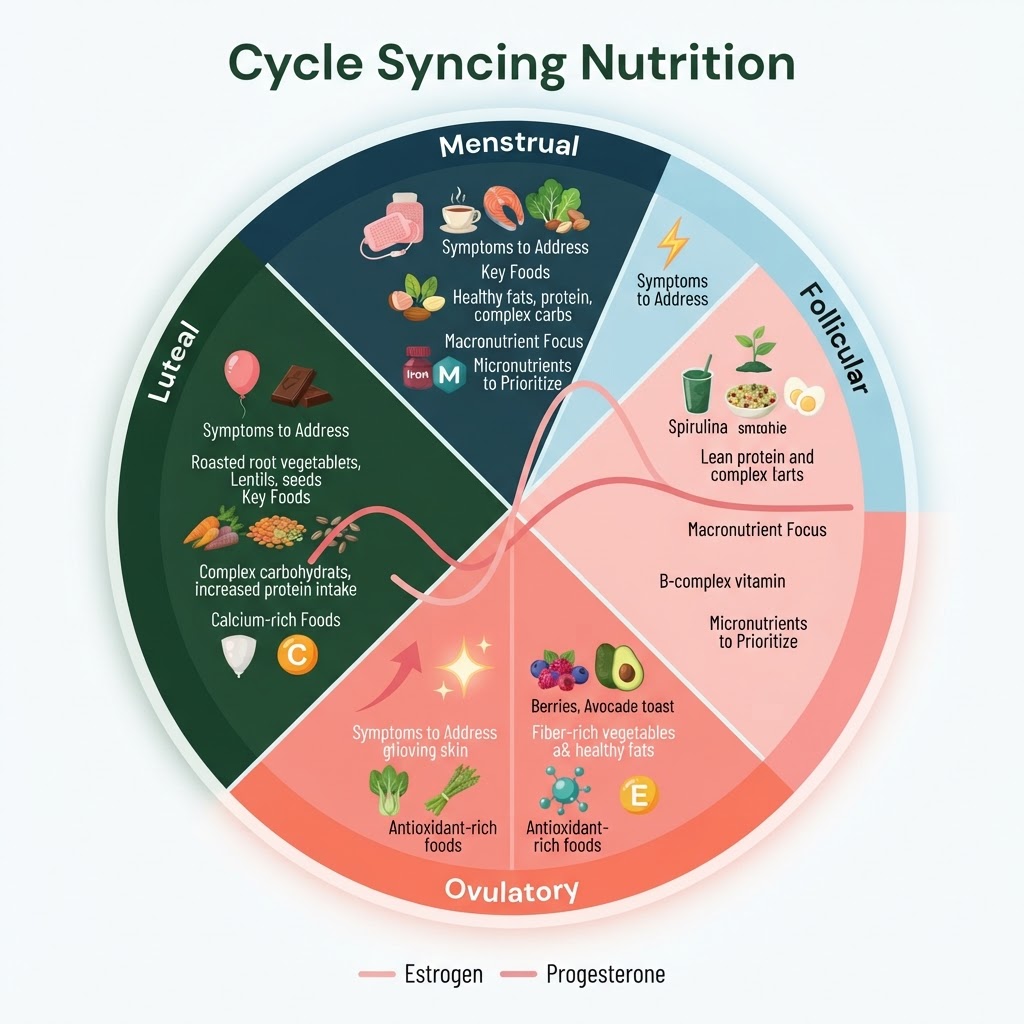 Figure: A circular diagram divided into four coloured segments representing each menstrual phase (Menstrual, Follicular, Ovulatory, Luteal), with icons showing key foods, macronutrient focus, micronutrients to prioritise, and common symptoms to address per phase — overlaid with a hormone curve showing estrogen and progesterone fluctuations throughout the cycle
Menstrual Phase Nutrition: Replenish and Reduce Inflammation
During menstruation, your primary nutritional priorities are iron replenishment, anti-inflammatory support, and gentle digestive nourishment.
Key nutrients:
- Iron: Blood loss depletes iron stores. Prioritise haem iron from grass-fed red meat, or non-haem iron from lentils, spinach, and pumpkin seeds paired with Vitamin C to enhance absorption.
- Omega-3 fatty acids: EPA and DHA from oily fish (salmon, sardines, mackerel) have been shown in multiple randomised controlled trials to reduce prostaglandin-driven cramping. A 2012 study in the Journal of Psychosomatic Obstetrics & Gynaecology found omega-3 supplementation significantly reduced dysmenorrhoea severity.
- Magnesium: Found in dark chocolate, avocado, and leafy greens, magnesium reduces prostaglandin synthesis and muscle cramping.
- Warming, easy-to-digest foods: Bone broth, soups, and stews reduce the burden on a gut that is already in an inflamed state.
Reduce: Alcohol, excessive caffeine, refined sugar, and trans fats — all of which amplify inflammation and worsen cramping.
Follicular Phase Nutrition: Build, Energise, and Detoxify
The follicular phase is your biological spring. Rising estrogen sharpens insulin sensitivity and promotes anabolic processes — meaning your body is primed to build muscle, absorb nutrients efficiently, and process toxins through the liver.
Key nutritional focus:
- Cruciferous vegetables: Broccoli, Brussels sprouts, cauliflower, and kale contain indole-3-carbinol (I3C) and its metabolite DIM (diindolylmethane), which support the liver's phase I and phase II detoxification pathways responsible for estrogen metabolism. This is hormonal nutrition at its most elegant.
- Fermented foods: Kimchi, sauerkraut, kefir, and yoghurt actively nourish the estrobolome during a phase when microbial diversity is at its highest. Pairing fermented foods with your daily Her-Biotics probiotic creates a powerful synbiotic effect.
- Lean proteins and complex carbohydrates: Improved insulin sensitivity means your muscles respond better to protein synthesis. Eggs, legumes, quinoa, and oats support sustained energy without blood sugar spikes.
- Zinc and B-vitamins: Both support follicle development and cellular energy production. Her-Biotics Original includes Zinc, B-vitamins, Vitamin C, and Vitamin E alongside its probiotic complex — making it an ideal companion for this phase.
Hormonal nutrition tip: Because estrogen metabolism depends heavily on adequate fibre, aim for 25–35g of dietary fibre daily during the follicular phase to support healthy estrogen clearance through the bowel.
Ovulatory Phase Nutrition: Anti-Inflammatory Peak Support
Ovulation is a brief but metabolically significant event. The inflammatory surge required to rupture the follicle means your anti-inflammatory defences need to be strong.
Key foods:
- Antioxidant-rich produce: Berries, peppers, citrus, and tomatoes combat oxidative stress during the ovulatory inflammatory surge.
- Fibre: Continues to support estrogen excretion as levels peak.
- Light, vibrant meals: Many women naturally feel drawn to raw salads, smoothies, and fresh foods during ovulation — this is your body's wisdom at work. Honour it.
Luteal Phase Nutrition: Calm, Nourish, and Support Progesterone
The luteal phase is where cycle syncing delivers its most dramatic results. This is the phase most associated with symptoms — and the phase where targeted nutrition creates the most meaningful relief.
Key nutritional strategies:
1. Increase complex carbohydrates strategically. The well-documented carbohydrate cravings of the late luteal phase are not a character flaw — they are a physiological signal. Serotonin production depends on tryptophan, which requires carbohydrate consumption to cross the blood-brain barrier. Low serotonin during the luteal phase contributes directly to mood symptoms. Choose sweet potato, oats, brown rice, and legumes rather than refined sugar to satisfy this need without triggering blood sugar volatility.
2. Prioritise magnesium glycinate. Magnesium deficiency is almost ubiquitous in women with PMS. Magnesium glycinate (the most bioavailable form) has been shown in research published on PubMed to significantly reduce water retention, mood symptoms, and bloating associated with PMS. Our Her-Biotics PMS Support formula includes therapeutic-dose Magnesium Glycinate alongside Chasteberry, Evening Primrose Oil, and Vitamin B6 — a combination specifically engineered for luteal phase hormonal support.
3. Support progesterone with B6 and zinc. Vitamin B6 is a cofactor in the enzymatic conversion of tryptophan to serotonin and is required for progesterone synthesis. Zinc plays a critical role in corpus luteum function. Both nutrients are found in the Her-Biotics PMS Support formula.
4. Reduce sodium and alcohol. Both exacerbate fluid retention and amplify the inflammatory load of the luteal phase. Even one to two alcoholic drinks during the late luteal phase have been shown to worsen PMS symptom scores by disrupting GABA receptor sensitivity.
5. Maintain your probiotic consistency. Gut motility slows under progesterone's influence. Consistent probiotic support during the luteal phase helps counteract this slowing, reduce bloating, and maintain the integrity of the gut lining. Do not skip your Her-Biotics during the week before your period — this is precisely when your microbiome needs it most.
The Microbiome-Hormone Axis: Why Probiotics Are Non-Negotiable in Cycle Syncing
Let's be direct: you cannot fully optimise your hormonal nutrition without addressing your gut. The relationship between the microbiome and endocrine health is bidirectional and profound.
What the research shows:
- Women with higher gut microbial diversity show more consistent estrogen metabolism and lower rates of estrogen-related conditions (NIH Human Microbiome Project data)
- Lactobacillus and Bifidobacterium species — the workhorses of a healthy gut — modulate systemic inflammation, which directly impacts prostaglandin synthesis and PMS severity
- Gut barrier integrity ("leaky gut") is associated with increased systemic inflammation, which worsens both PMS and perimenopausal symptoms
- The production of short-chain fatty acids by gut bacteria supports the synthesis of steroid hormones, including progesterone
Most probiotic supplements fail to deliver meaningful clinical benefit because the bacteria are dead by the time they reach the colon — killed by manufacturing heat, shelf storage, and stomach acid. This is the problem Her-Biotics was built to solve.
Our proprietary SCO2 (supercritical carbon dioxide) microencapsulation technology encases each probiotic strain in a protective lipid matrix using pressurised CO₂ — a cold process that preserves bacterial viability without heat or chemical solvents. The result is a supplement that delivers 1000× more viable probiotics to the gut than conventional capsules. For women using cycle syncing as a hormonal health strategy, this is the difference between a nutritional footnote and a genuine physiological intervention.
Explore the full science behind SCO2 technology on our Science Page.
Building Your Cycle Syncing Nutrition Plan: Practical Principles
Cycle syncing does not require perfection or complicated meal planning. Here are the foundational principles to build your approach around:
-
Track your cycle consistently. You cannot sync what you cannot see. Use an app (Clue, Natural Cycles, or a simple calendar) to track your cycle length, symptoms, and patterns for at least three months.
-
Anchor your nutrition in whole foods. Cycle syncing amplifies the benefits of a nutrient-dense diet — it does not replace one. Vegetables, quality proteins, healthy fats, and complex carbohydrates form the non-negotiable foundation.
-
Adjust, don't overhaul. You are making phase-specific emphasis shifts — more iron-rich foods during menstruation, more cruciferous vegetables during the follicular phase, more magnesium and complex carbs during the luteal phase. This is nuance, not a complete diet change every week.
-
Support your microbiome daily. Your gut does not take days off, and neither should your probiotic. Take Her-Biotics Original or the formula matched to your specific hormonal health goals every day, regardless of cycle phase.
-
Hydration is hormonal nutrition too. Estrogen and progesterone both influence fluid balance and kidney function. Aim for at least 2–2.5 litres of water daily, increasing during the luteal phase when fluid retention is active.
-
Listen to your body's signals. Cravings, energy dips, digestive changes, and mood shifts are data. Cycle syncing teaches you to decode them rather than suppress them.
A Note on Perimenopause, Cycle Irregularity, and Cycle Syncing
Women in perimenopause — typically beginning in the mid-40s — often experience irregular cycles, unpredictable ovulation, and amplified hormonal swings. Cycle syncing in its traditional form becomes more challenging when cycles are inconsistent, but the nutritional principles remain entirely valid.
For women navigating perimenopause, I recommend focusing on symptom-guided hormonal nutrition rather than strictly day-based syncing: prioritise anti-inflammatory foods and phytoestrogens (flaxseed, soy, fermented legumes) consistently, support gut health aggressively, and consider a formula specifically designed for this transition.
Her-Biotics Menopause Support combines our SCO2 probiotic complex with Black Cohosh, Red Clover, Sage Leaf, and Vitamin D3/K2 — a scientifically curated stack for the specific hormonal terrain of perimenopause and menopause. And for women over 50 seeking broader cellular and metabolic support, Her-Biotics Ageless 50+ adds NAD+, Astaxanthin, CoQ10, and Resveratrol to the foundational probiotic framework.
Find detailed guidance for every life stage in our Radiance Hub.
Final Thoughts: Your Cycle Is Your Compass
For too long, the menstrual cycle was framed as a monthly inconvenience — something to manage, suppress, or simply endure. Cycle syncing nutrition reframes it entirely: your cycle is one of the most sophisticated biological feedback systems available to you. When you learn its language and respond with targeted, phase-appropriate nourishment, you are not just managing symptoms. You are building a foundation for long-term hormonal health, gut resilience, and vitality.
The science is there. The tools are available. And you are more than capable of using both.
Ready to Sync Your Cycle with the Right Probiotic Support?
Whether you are navigating PMS in your 30s, hormonal shifts in perimenopause, or simply want to feel consistently well across every phase of your cycle, Her-Biotics has a formula engineered for your exact biology. Our SCO2 microencapsulation technology ensures that every strain we put in the capsule actually reaches your gut alive — because a probiotic that doesn't survive the journey is a probiotic that can't do its job. Start with Her-Biotics Original as your daily hormonal foundation, or take our 60-second quiz to find the formula matched to your specific cycle health goals. Shop All Formulas and take the first step toward a cycle that works for you, not against you.
Dr. Chomba Chuma is a medical doctor and the founder of Her-Biotics. She specialises in women's hormonal health, gut microbiome science, and integrative nutrition. The information in this article is for educational purposes and does not constitute personalised medical advice. Always consult a qualified healthcare provider before making significant changes to your supplement regimen.