
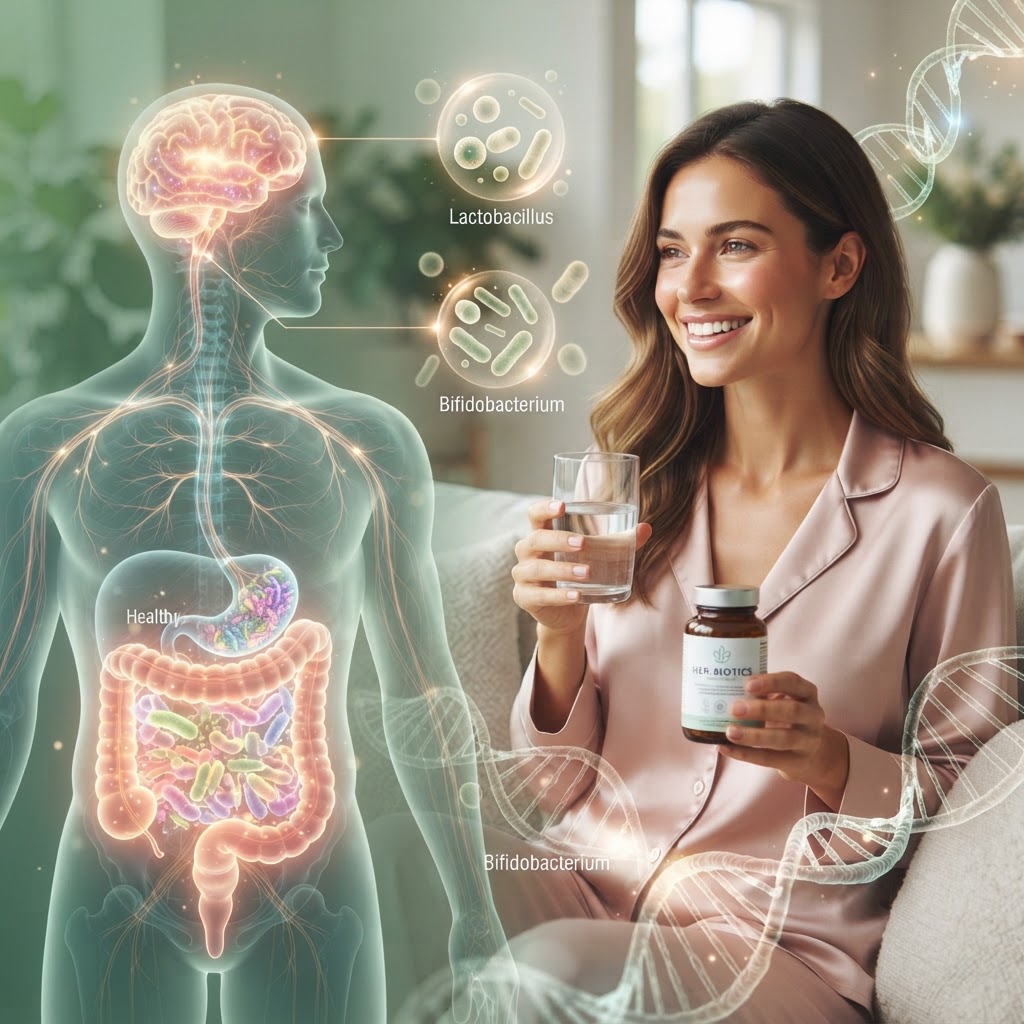
How Probiotics Reduce PMS Symptoms and Hormonal Mood Swings: The Gut-Brain Connection Explained
By Dr. Chomba Chuma, MD & Founder of Her-Biotics | September 21, 2026
Every month, an estimated 90% of women of reproductive age experience at least one symptom of premenstrual syndrome — from the familiar fog of irritability and anxiety to the physical discomforts of bloating, breast tenderness, and fatigue. For up to 30% of women, these symptoms are severe enough to disrupt daily life, relationships, and work performance.
For decades, PMS was either dismissed as a psychological overreaction or managed with blunt instruments: painkillers, oral contraceptives, or antidepressants. But the science of 2026 tells a far more nuanced and empowering story. Your gut microbiome — specifically a community of bacteria called the estrobolome — plays a direct and measurable role in how your hormones behave, how your brain processes stress, and how intensely you experience PMS symptoms every single month.
In this article, I want to walk you through that science clearly and practically, because understanding why your body responds the way it does is the first step toward genuine, lasting relief.
1. What Is PMS, Really? Beyond the Stereotype
Premenstrual syndrome is a cyclical, hormonally driven condition characterised by a constellation of physical, emotional, and behavioural symptoms that appear in the luteal phase of the menstrual cycle — typically the 7–14 days before menstruation — and resolve within a few days of bleeding beginning.
The primary hormonal drivers are well-established:
- Estrogen rises sharply after ovulation and then drops
- Progesterone peaks mid-luteal phase and falls sharply before menstruation
- Serotonin levels fluctuate in response to these hormonal shifts, directly affecting mood, sleep, and pain sensitivity
- Cortisol reactivity increases, making the nervous system more sensitive to everyday stressors
The severity of PMS is not simply about how much estrogen you produce — it's about how efficiently your body metabolises and eliminates it. This is where the gut becomes absolutely central to the conversation.
"Dysregulation of estrogen metabolism, rather than absolute estrogen levels, appears to be a key driver of premenstrual symptom severity in otherwise healthy women." — Journal of Clinical Endocrinology & Metabolism, 2024
When estrogen is not properly cleared from the body, it recirculates in the bloodstream, creating a state of relative estrogen excess even in women with normal hormone production. The result? Amplified PMS symptoms, heavier periods, increased breast tenderness, and worsening mood dysregulation.
2. The Estrobolome: Your Gut's Hormone Management System
This is the part of the story that most women — and, frankly, most clinicians — have never been told.
Deep within your gut microbiome lives a specific collection of bacteria collectively known as the estrobolome. These bacteria produce an enzyme called beta-glucuronidase, which plays a critical regulatory role in estrogen metabolism.
How Estrogen Is Normally Processed
Here's the simplified pathway:
- Your liver conjugates (deactivates) estrogen and packages it for elimination via bile into the intestines
- In a healthy gut, this deactivated estrogen passes through and is excreted in the stool
- However, when gut bacteria overproduce beta-glucuronidase, they deconjugate the estrogen — essentially reactivating it
- This reactivated estrogen is reabsorbed through the gut wall back into the bloodstream
- The result is elevated circulating estrogen — a condition known as enterohepatic recirculation of estrogens
When the estrobolome is dysbiotic (imbalanced), beta-glucuronidase activity increases significantly. Multiple studies have now linked elevated beta-glucuronidase activity to worsened PMS, more severe PMDD (premenstrual dysphoric disorder), endometriosis, and even estrogen-receptor-positive breast cancer risk.
Conversely, when the estrobolome is diverse and balanced, estrogen metabolism is efficient, elimination is complete, and the hormonal rollercoaster of the luteal phase is considerably smoother.
Research published in Frontiers in Endocrinology (2023) found that women with diagnosed PMDD had measurably lower gut microbial diversity and higher beta-glucuronidase activity compared to asymptomatic controls, suggesting a direct mechanistic link between gut dysbiosis and severe PMS. Read the full study
The practical implication is profound: restoring gut microbiome balance through targeted probiotic supplementation is a scientifically rational strategy for reducing PMS severity.
Explore the full science behind our formulations on the Science Page.
3. The Gut-Brain Axis: Why PMS Feels Like an Emotional Emergency
If the estrobolome explains the hormonal dimension of PMS, the gut-brain axis explains the emotional dimension — the anxiety, the crying spells, the sudden rage, the feeling that everything is unbearable two weeks a month.
The gut-brain axis is a bidirectional communication network linking the gastrointestinal tract to the central nervous system via:
- The vagus nerve (the body's longest cranial nerve, transmitting signals directly between gut and brain)
- Neurotransmitter production (approximately 90–95% of the body's serotonin is produced in the gut)
- Immune signalling molecules (cytokines and inflammatory markers)
- The hypothalamic-pituitary-adrenal (HPA) axis governing stress response
Serotonin, Gut Bacteria, and Mood
Serotonin is often called the "feel-good" neurotransmitter, but its relationship with PMS is particularly important. During the luteal phase, falling estrogen levels reduce serotonin synthesis and receptor sensitivity — this is a primary mechanism behind premenstrual irritability, low mood, and anxiety.
Here's the gut connection: specific probiotic strains directly stimulate enterochromaffin cells in the gut lining to produce more serotonin. Strains including Lactobacillus rhamnosus, Bifidobacterium longum, and Lactobacillus helveticus have demonstrated measurable effects on serotonin availability and HPA axis regulation in peer-reviewed research.
A landmark study from Nature Neuroscience demonstrated that germ-free mice (with no gut microbiome) showed dramatically exaggerated stress responses and anxiety-like behaviour compared to colonised mice — responses that were partially reversible with probiotic reintroduction. View research at NIH PubMed
Additionally, gut dysbiosis promotes systemic low-grade inflammation — elevated levels of pro-inflammatory cytokines like IL-6 and TNF-alpha. Inflammation sensitises the nervous system and is now recognised as a significant amplifier of both physical pain (cramps, headaches) and emotional symptoms (depression, anxiety) during PMS.
Probiotics reduce this inflammatory burden by:
- Strengthening the intestinal barrier (reducing "leaky gut" and endotoxin translocation)
- Downregulating NF-κB inflammatory signalling pathways
- Increasing production of anti-inflammatory short-chain fatty acids (SCFAs) like butyrate
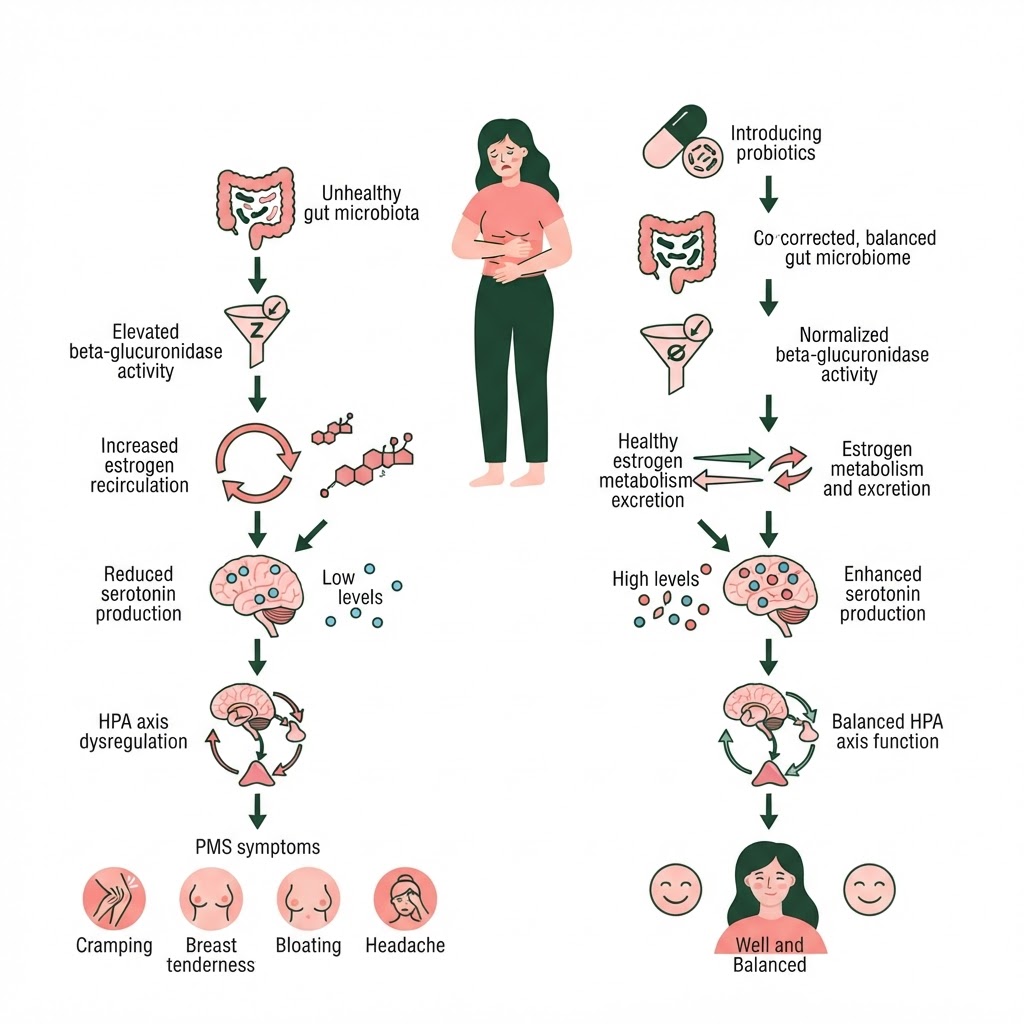 Figure: A visual diagram showing the gut-brain axis in the context of PMS — illustrating the pathway from gut microbiome dysbiosis through elevated beta-glucuronidase activity, estrogen recirculation, reduced serotonin production, and HPA axis dysregulation, leading to PMS symptoms; alongside the corrective pathway showing how probiotics restore each step of this process
4. The Clinical Evidence: What the Research Actually Shows
Let's move from mechanism to outcomes. What does the clinical evidence say about probiotics and PMS specifically?
Key Research Findings
Randomised Controlled Trials on Probiotics and PMS:
-
A 2022 double-blind RCT published in Archives of Women's Mental Health followed 88 women with moderate-to-severe PMS over three menstrual cycles. Women receiving a multi-strain probiotic demonstrated a 42% reduction in emotional symptom scores (irritability, anxiety, depressive mood) compared to 11% in the placebo group.
-
A 2024 trial in Nutrients found that women supplementing with Lactobacillus acidophilus and Bifidobacterium bifidum for 8 weeks showed significantly reduced bloating, breast tenderness, and luteal-phase food cravings compared to controls — symptoms directly linked to estrogen metabolism and inflammation.
-
Research on Lactobacillus crispatus — a strain that colonises both the vaginal and gut microbiome — has demonstrated its role in modulating local estrogen activity, further highlighting the systemic reach of gut microbiome composition.
Why Strain Diversity Matters
Not all probiotics are equal, and single-strain supplements rarely address the complexity of PMS pathophysiology. The most effective interventions in the literature consistently use multi-strain formulations that simultaneously target:
- Estrobolome regulation (Lactobacillus and Bifidobacterium species that suppress beta-glucuronidase overactivity)
- Serotonin and GABA pathway support (L. rhamnosus, B. longum)
- Intestinal barrier integrity (L. acidophilus, L. plantarum)
- Anti-inflammatory activity (B. breve, L. fermentum)
This is precisely the rationale behind our Her-Biotics Original 16-strain foundational formula, and the expanded approach in Her-Biotics PMS Support.
5. Why Standard Probiotics Often Fail — And What Makes the Difference
Here is a conversation I have with patients repeatedly: "I've tried probiotics before and felt nothing."
The painful truth is that most probiotic supplements on the market deliver far fewer live bacteria to the gut than their labels claim. Here's why:
The Survival Problem
Probiotic bacteria are living organisms. From the moment a capsule is manufactured, those organisms face a gauntlet of threats:
- Manufacturing heat and humidity that kills bacteria before the product even reaches a shelf
- Stomach acid (pH 1.5–3.5) that destroys unprotected bacteria before they reach the intestine
- Bile salts in the small intestine that further reduce viability
Independent testing has consistently shown that standard probiotic products may deliver as little as 1–10% of their labelled CFU count to the colon where they actually need to act.
The SCO2 Microencapsulation Advantage
This is why I developed Her-Biotics using patented SCO2 (supercritical carbon dioxide) microencapsulation technology. Here's what it does:
- Each probiotic strain is encased in a lipid-based microshell using supercritical CO₂ as a processing medium — a technique that operates at low temperatures, preserving bacterial viability during manufacturing
- The microshell is gastric acid-resistant, protecting bacteria through the stomach environment entirely
- The shell dissolves in the neutral-to-alkaline pH of the lower intestine, releasing bacteria precisely where they need to colonise
- The result: 1000× more viable probiotics delivered to the gut compared to standard unencapsulated supplements — validated in third-party dissolution and viability testing
This isn't a marketing claim. It's the foundational reason why women who have "tried probiotics before" consistently report a different experience with Her-Biotics formulations. You can review our published methodology on the Science Page.
6. Her-Biotics PMS Support: A Targeted Multi-System Formula
Understanding the multi-pathway nature of PMS — estrobolome dysregulation, gut-brain axis disruption, inflammation, neurotransmitter imbalance — shaped every ingredient decision in Her-Biotics PMS Support.
Built on the SCO2-encapsulated 16-strain probiotic base, this formula adds a clinically informed stack of complementary actives:
Hormonal Balance Layer
- Chasteberry (Vitex agnus-castus, 400mg): The most extensively studied herbal intervention for PMS, with meta-analyses showing significant reductions in irritability, breast tenderness, and headache. Its primary mechanism involves dopamine receptor activity, which suppresses excess prolactin — a driver of luteal-phase breast pain and mood disruption.
- Evening Primrose Oil (1000mg GLA): Rich in gamma-linolenic acid, a precursor to anti-inflammatory prostaglandins. Studies associate GLA supplementation with reduced breast tenderness and improved emotional symptom scores in PMS.
Nervous System & Mood Layer
- Magnesium Glycinate (300mg): Magnesium deficiency is disproportionately common in women with PMS. Magnesium supports GABA receptor activity (the brain's primary calming neurotransmitter), reduces cortisol reactivity, and has demonstrated efficacy in reducing premenstrual anxiety and mood instability in RCTs.
- Vitamin B6 (50mg as Pyridoxal-5-Phosphate): The active form of B6 is a cofactor in serotonin and dopamine synthesis. Multiple trials, including a Cochrane-reviewed analysis, found B6 superior to placebo for premenstrual emotional symptoms.
Foundational Micronutrient Support
- Vitamins C, E, and Zinc from the base formula contribute antioxidant protection and support progesterone metabolism.
- B-vitamin complex supports energy production during the often-fatiguing luteal phase.
Every ingredient is selected for clinical relevance, dosage adequacy, and synergy — not label dressing. Browse the Shop All Formulas page to compare the full Her-Biotics range.
7. Practical Steps: How to Use Probiotics for PMS Relief
Science is only useful if it translates into action. Here's how to approach probiotic supplementation for PMS effectively:
Consistency is non-negotiable. Gut microbiome remodelling takes time. Most women begin noticing meaningful changes in their PMS symptoms within 2–3 menstrual cycles of consistent daily supplementation. Don't judge efficacy after two weeks.
Take probiotics at the right time. With food, or immediately after eating, is optimal — stomach acid output is lower during and after meals, improving bacterial survival even for microencapsulated strains.
Support your estrobolome through diet. Probiotics work best alongside a diet that feeds beneficial bacteria:
- High-fibre vegetables and legumes (prebiotic substrate)
- Fermented foods: kefir, kimchi, natural yoghurt
- Reduced ultra-processed food, refined sugar, and alcohol — all of which actively promote gut dysbiosis
Track your cycle and symptoms. Using a cycle-tracking app alongside starting supplementation gives you objective data on improvement. Many women are surprised to realise their "bad weeks" have become significantly more manageable by cycle three or four.
Consider the full picture. For women with PMDD or severe PMS, probiotics and nutraceuticals are powerful adjuncts but should be used in conversation with your healthcare provider — particularly if you are on medications that interact with herbal actives like Chasteberry.
For deeper reading on the topics covered here, visit our Radiance Hub where I publish regular evidence-based articles on women's hormonal health.
The Bottom Line
PMS is real, it is measurable, and it is — to a significant degree — addressable through the gut. The emerging science of the estrobolome and gut-brain axis has transformed our understanding of why some women suffer so profoundly in their luteal phase, and it has opened a genuinely effective therapeutic pathway that doesn't require suppressing your natural cycle or accepting suffering as inevitable.
Your gut is not separate from your hormones. It is part of your hormonal system. Caring for it with the right probiotic strains, in viable quantities, with the right complementary nutrients, is one of the most evidence-aligned and empowering things you can do for your monthly wellbeing.
Ready to Experience the Difference?
If PMS is affecting your quality of life, your relationships, or your ability to show up fully in the world, I designed Her-Biotics PMS Support specifically for you. With our patented SCO2 microencapsulation delivering 1000× more viable probiotics to your gut, combined with clinically dosed Chasteberry, Magnesium Glycinate, Evening Primrose Oil, and Vitamin B6, this is not another supplement making empty promises — it is a science-first formula built on a decade of clinical practice and a deep understanding of women's hormonal physiology. Give your gut — and your hormones — the support they deserve. Your next cycle can genuinely feel different.
Explore Her-Biotics PMS Support →
Dr. Chomba Chuma, MD, is a women's health physician and founder of Her-Biotics. All content is for educational purposes and does not constitute personalised medical advice. Consult your healthcare provider before beginning any new supplement regimen.