
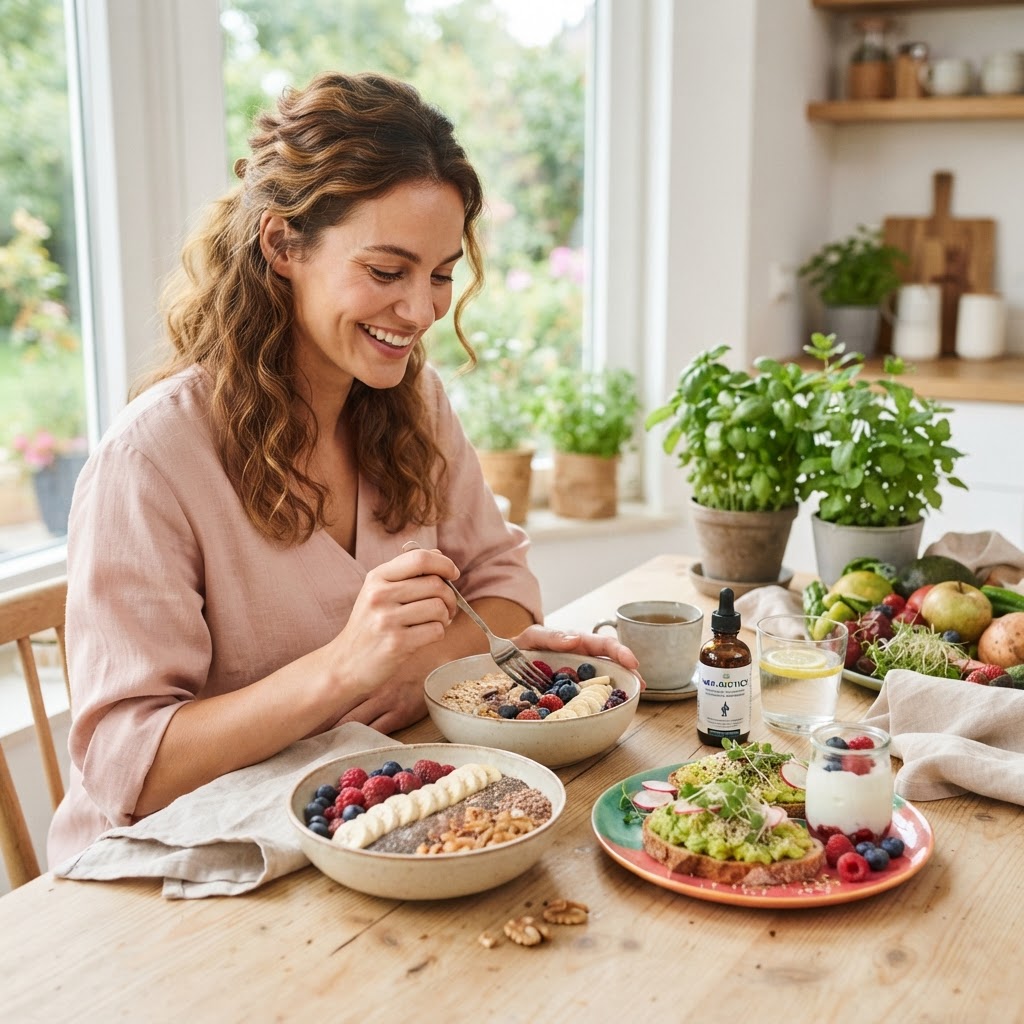
Prebiotic Foods That Supercharge Your Probiotic Supplement (Science-Backed Guide)
By Dr. Chomba Chuma, MD & Founder of Her-Biotics | August 24, 2026
If you've invested in a high-quality probiotic supplement, you've already made one of the smartest decisions you can make for your long-term health. But here's something most brands won't tell you: the billions of beneficial bacteria in your capsule are only as effective as the gut environment they land in.
Think of it this way. You could plant the highest-quality seeds in the world, but without fertile soil, water, and sunlight, they simply won't grow. Prebiotics are that fertile soil. They are the non-digestible food compounds that selectively feed and fuel your beneficial gut bacteria — and without them, even the most advanced probiotic supplement will underperform.
As a physician and the founder of Her-Biotics, I've spent years studying the intersection of nutrition, the female microbiome, and supplementation science. One of the most consistent findings in my clinical experience and in the broader research literature is this: women who combine strategic prebiotic nutrition with a quality probiotic supplement see dramatically better outcomes — in digestion, immunity, hormonal balance, mood, and energy.
In this article, I'm going to walk you through the science of prebiotics, the best prebiotic foods to incorporate into your daily diet, how they create probiotic synergy, and exactly how to pair them with your Her-Biotics formula for transformative results.
1. What Are Prebiotics — And Why Women Need Them More Than Ever
The term "prebiotic" was first formally defined in 1995 by scientists Gibson and Roberfroid, and the definition has been refined over time. Today, the most widely accepted scientific definition, as updated by the International Scientific Association for Probiotics and Prebiotics (ISAPP), describes a prebiotic as "a substrate that is selectively utilized by host microorganisms conferring a health benefit."
In plain language: prebiotics are compounds — primarily certain types of fiber and some non-fiber molecules — that your own digestive enzymes cannot break down. Instead, they travel intact to your colon, where your gut bacteria ferment and feed on them.
The most extensively studied classes of prebiotics include:
- Inulin and fructooligosaccharides (FOS) — found in chicory root, garlic, onions, leeks, and asparagus
- Galactooligosaccharides (GOS) — found in legumes and human breast milk
- Resistant starch — found in cooked and cooled potatoes, green bananas, oats, and legumes
- Beta-glucan — found in oats and barley
- Pectin — found in apples, berries, and citrus fruits
- Arabinoxylan — found in whole wheat and psyllium husk
Why do women specifically need to pay attention to their prebiotic intake? Because the female microbiome is uniquely dynamic. Hormonal fluctuations throughout the menstrual cycle, pregnancy, perimenopause, and menopause create constant shifts in gut bacterial populations. Research published in Cell Host & Microbe has shown that estrogen and progesterone directly influence microbial composition and diversity. When these hormones fluctuate, the gut is more vulnerable to dysbiosis — and prebiotic fiber is one of the most powerful dietary tools we have to maintain stability.
"Dietary fiber intake is one of the most robust predictors of gut microbiome diversity in human populations, and microbiome diversity is strongly associated with metabolic, immune, and mental health outcomes." — Dahl et al., Frontiers in Nutrition, 2023
The average woman in the UK and US consumes only 12–15g of fiber per day — significantly below the recommended 25–38g. This chronic fiber gap is one of the leading reasons why probiotic supplements fail to deliver their full potential.
2. The Science of Probiotic Synergy: How Prebiotics Amplify Your Supplement
Probiotic synergy — sometimes called the "synbiotic effect" — refers to the measurable amplification in health outcomes that occurs when probiotics and prebiotics are combined, compared to either taken alone.
Here's what happens at a mechanistic level:
The Colonization Window
When you take a probiotic supplement, the beneficial bacteria must survive the harsh acidic environment of your stomach, transit through the small intestine, and successfully colonize the colon. This is why our SCO2 microencapsulation technology is so critical — it protects bacterial viability during transit. But once those bacteria arrive at the colon, they need an immediate fuel source to establish themselves.
Prebiotic fibers are that fuel. Without them, newly introduced probiotic strains struggle to compete with established bacteria for resources and attachment sites on the gut wall.
Short-Chain Fatty Acid Production
When gut bacteria ferment prebiotic fibers, they produce short-chain fatty acids (SCFAs) — primarily butyrate, propionate, and acetate. These molecules are arguably the most important metabolites your gut produces:
- Butyrate is the primary fuel for colonocytes (colon cells), maintains gut barrier integrity, and has potent anti-inflammatory properties
- Propionate travels to the liver and helps regulate blood sugar and cholesterol
- Acetate supports immune regulation and may influence appetite hormones
A landmark study published in Nature demonstrated that increasing dietary fiber significantly increased SCFA production and was associated with reduced systemic inflammation markers — a finding with profound implications for women managing conditions like endometriosis, PCOS, and autoimmune disease.
Microbiome Diversity as a Health Biomarker
Microbiome diversity — the richness and evenness of different bacterial species in your gut — is now considered one of the most important biomarkers of overall health. Low diversity is consistently linked to obesity, type 2 diabetes, inflammatory bowel conditions, depression, and impaired immune function.
Prebiotics selectively feed beneficial genera like Bifidobacterium, Lactobacillus, Faecalibacterium prausnitzii, and Akkermansia muciniphila, all of which are associated with reduced inflammation, better mood, improved hormonal metabolism, and stronger immunity. Combining a multi-strain probiotic like Her-Biotics Original with consistent prebiotic food intake is the most evidence-based approach to building genuine, lasting microbiome diversity.
For a deeper look at the clinical research underpinning our formulas, visit our Science Page.
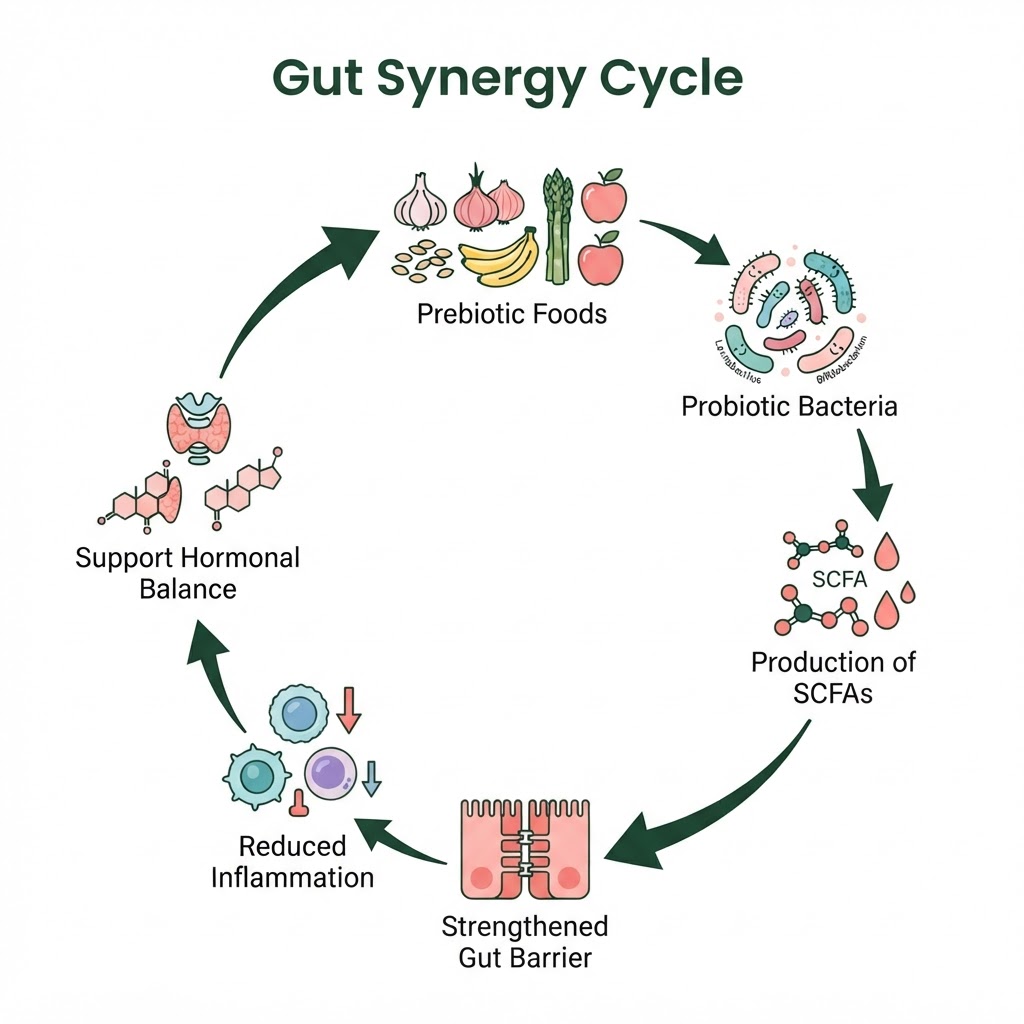 Figure: A visual showing the "Gut Synergy Cycle" — how prebiotic foods feed probiotic bacteria, which produce SCFAs, which strengthen the gut barrier, reduce inflammation, and support hormonal balance; with arrows linking each stage and icons representing foods, bacteria strains, and health outcomes
3. The Top Prebiotic Foods to Eat Alongside Your Her-Biotics Supplement
Not all fiber-rich foods are equal when it comes to prebiotic potency. Below are the most research-backed prebiotic foods, organized by their primary active compounds and practical benefits for women.
High-Inulin and FOS Foods
These are among the most potent prebiotics for feeding Bifidobacterium strains — the genus most associated with female hormonal health, mood regulation via the gut-brain axis, and immune modulation.
- Chicory root — the richest dietary source of inulin (up to 41.6% dry weight); often used as a coffee alternative
- Jerusalem artichoke — sometimes called "sunchokes"; extraordinarily rich in inulin
- Garlic — 9–16% FOS by dry weight; also has potent antimicrobial properties against pathogenic bacteria
- Onions and leeks — versatile culinary staples with meaningful inulin content
- Asparagus — contains inulin plus folate, essential for women of reproductive age
- Dandelion greens — often overlooked; among the highest inulin-to-weight ratios of any whole food
Resistant Starch Foods
Resistant starch is the prebiotic fiber that most powerfully stimulates butyrate production — making it especially important for gut barrier integrity and reducing intestinal permeability ("leaky gut"), a condition that disproportionately affects women.
- Green (unripe) bananas — contain up to 70% resistant starch; a perfect addition to smoothies with your Her-Biotics supplement
- Cooked and cooled potatoes or rice — cooking and cooling converts digestible starch to resistant starch (a process called retrogradation); perfect for meal prep
- Oats (raw or overnight) — rich in beta-glucan and resistant starch simultaneously
- White beans and lentils — double benefit as both prebiotic fiber and plant protein sources
- Plantains — widely consumed across African and Caribbean cuisines; an excellent resistant starch source
Pectin-Rich Foods
Pectin is a soluble fiber that feeds a broad spectrum of beneficial bacteria and is particularly effective at supporting bowel regularity — a common concern among women, especially those experiencing hormonal fluctuations.
- Apples (with skin)
- Berries — blueberries, raspberries, and blackberries offer pectin plus polyphenols that act as additional prebiotic compounds
- Citrus fruits — the pith (white layer beneath the zest) is especially rich in pectin
Polyphenol-Rich Foods (Emerging Prebiotics)
One of the most exciting areas in microbiome research is the recognition that polyphenols — antioxidant compounds found in colourful plant foods — also function as prebiotics by selectively feeding beneficial bacteria.
"Polyphenols and their gut microbial metabolites have been shown to modulate the composition of the gut microbiota and to inhibit the growth of pathogenic bacteria, suggesting that polyphenols could be considered as prebiotics." — Dueñas et al., Nutrients, 2021. Read the full study
Key polyphenol sources with prebiotic activity:
- Dark chocolate (70%+ cocoa)
- Green tea and matcha
- Red wine (in moderation)
- Extra virgin olive oil
- Pomegranate
4. Fermented Foods vs. Prebiotics: Understanding the Difference and Why You Need Both
A question I frequently receive from patients and Her-Biotics community members is: "If I eat fermented foods, do I still need prebiotics — or a probiotic supplement?"
The answer is nuanced and important.
Fermented foods — such as live-culture yoghurt, kefir, kimchi, sauerkraut, miso, tempeh, and kombucha — contain live bacteria that can temporarily populate the gut and provide health benefits. A landmark Stanford study published in Cell (2021) found that a diet high in fermented foods significantly increased microbiome diversity and decreased 19 inflammatory markers over a 10-week period. Read the original research here.
However, fermented foods have meaningful limitations when used alone:
- Strain specificity is unpredictable. The bacterial strains in fermented foods vary enormously by brand, batch, and storage conditions. You have no certainty about which strains you're consuming or in what quantities.
- Viability is compromised. Most bacteria in fermented foods are exposed to oxygen, acidity, and temperature fluctuations long before they reach your gut — dramatically reducing viable counts.
- Coverage is limited. A single fermented food typically contains 1–5 strains. Her-Biotics formulas deliver 16 clinically validated strains, protected by SCO2 microencapsulation for 1000× superior viability.
- They don't address deficiencies. Fermented foods don't feed the bacteria already residing in your colon the way prebiotic fibers do.
The optimal strategy is a three-pillar approach:
- ✅ Prebiotic-rich whole foods — to feed and sustain your existing microbiome
- ✅ Fermented foods — to introduce diverse transient bacteria and bioactive compounds
- ✅ A high-quality probiotic supplement — for consistent, targeted, strain-specific delivery
Think of fermented foods and prebiotic foods as complementary dietary strategies that amplify what your Her-Biotics supplement achieves — not replacements for it.
5. Practical Strategies: How to Build a Prebiotic-Rich Day Around Her-Biotics
Knowing which foods to eat is only half the equation. The other half is building practical, sustainable habits that make prebiotic nutrition effortless. Here's how I recommend structuring your day:
Morning: Prime Your Gut from the First Meal
- Take your Her-Biotics supplement with your first meal or alongside breakfast (food increases bacterial survival rates in the stomach)
- Overnight oats made with rolled oats, a green banana, blueberries, and a tablespoon of chicory-based prebiotic powder delivers a powerful prebiotic hit first thing
- Add a tablespoon of extra virgin olive oil to eggs or toast for polyphenol-based prebiotic activity
- Consider adding fermented foods like a small portion of live-culture yoghurt or kefir
Lunch: Build Microbiome Diversity on Your Plate
- Aim for at least 5 different plant foods at lunch — diversity of plants directly correlates with microbiome diversity
- A lentil and roasted vegetable salad with apple slices and a tahini dressing ticks multiple prebiotic boxes simultaneously
- Cooked and cooled grains (quinoa, rice, or potato) increase resistant starch content significantly compared to freshly cooked versions
Dinner: End the Day With Gut-Healing Foods
- Include alliums (garlic, onion, leek) as the flavour base of your cooking — they are perhaps the easiest way to meaningfully increase daily FOS intake
- Incorporate cooked legumes (chickpeas, black beans, lentils) at least 3–4 evenings per week
- Add a side of fermented vegetables like kimchi or sauerkraut
Snacks and Between Meals
- Apple slices with almond butter
- A small handful of mixed berries
- Dandelion tea or chicory root coffee
- Dark chocolate (70%+) as an evening treat
Important Note on Introducing Prebiotics
If you are new to a high-fiber diet, increase prebiotic foods gradually over 2–4 weeks. Introducing large amounts of fermentable fiber too quickly can cause temporary bloating, gas, and discomfort as your microbiome adapts. This is a sign that your gut bacteria are active and fermenting — but the transition is smoother when taken slowly.
6. Tailoring Your Prebiotic Strategy to Your Her-Biotics Formula
Different stages of a woman's life call for different nutritional strategies — and the same is true for prebiotic pairing.
For Her-Biotics PMS Support Users
If you're using Her-Biotics PMS Support, prioritise prebiotic foods that support estrogen metabolism through the gut. The estrobolome — the collection of gut bacteria that metabolise estrogen — is directly influenced by fiber intake. High-fiber diets promote the excretion of used estrogen rather than its reabsorption, which may help reduce estrogen-dominance symptoms like bloating, breast tenderness, and mood fluctuations. Focus on: flaxseeds, cruciferous vegetables (broccoli, Brussels sprouts), and high-FOS vegetables like leeks and garlic.
For Her-Biotics Menopause Support Users
During menopause, declining estrogen is associated with reduced microbiome diversity and increased intestinal permeability. Resistant starch and beta-glucan from oats become especially important, as does the anti-inflammatory polyphenol load from berries, green tea, and olive oil. These align powerfully with the phytoestrogen-supporting botanical blend in the Menopause Support formula.
For Her-Biotics Sport Users
Active women have higher protein turnover, which can generate ammonia in the colon — a compound that feeds pathogenic bacteria. Prebiotic fibers help counteract this by increasing the ratio of beneficial SCFA-producing bacteria. Prioritise resistant starch from sweet potatoes, oats, and legumes to fuel both your workouts and your microbiome.
For Her-Biotics Ageless 50+ Users
Gut motility naturally slows after 50, increasing transit time and the risk of dysbiosis. High-inulin foods and soluble pectin are particularly helpful for maintaining bowel regularity and supporting the production of urolithins — gut-derived metabolites from polyphenols that have promising anti-aging cellular effects that complement the NAD+ and Resveratrol in the Ageless 50+ formula.
For more personalised guidance on which formula suits your life stage and health goals, visit our Radiance Hub or explore the full Shop All Formulas page.
The Bottom Line: Soil Before Seeds
Your probiotic supplement is a precision tool — and like any precision tool, its effectiveness depends entirely on the conditions you create for it. Prebiotics are not optional extras. They are the foundation upon which a thriving, diverse, resilient gut microbiome is built.
The science is unambiguous: dietary fiber and prebiotic compounds feed beneficial bacteria, drive short-chain fatty acid production, reduce systemic inflammation, support hormonal balance, and dramatically amplify the outcomes you can expect from a high-quality probiotic supplement. For women navigating the demands of modern life — whether that's managing PMS, perimenopause, athletic performance, or simply the desire to age with vitality — the prebiotic-probiotic combination is one of the most powerful evidence-based interventions available without a prescription.
Start with one or two changes this week. Add garlic to your evening cooking. Swap your morning breakfast for overnight oats with a green banana. Take your Her-Biotics capsule alongside a meal. These are small, achievable shifts that compound into profound change over weeks and months.
Ready to experience the full power of probiotic synergy? Her-Biotics Original delivers 16 clinically validated strains, protected by our patented SCO2 microencapsulation technology for 1000× superior gut delivery — designed to work in concert with the prebiotic-rich diet you're building. Explore our full range of women's formulas at Shop All Formulas and find the perfect match for your health goals today. Your gut — and your future self — will thank you.
Dr. Chomba Chuma is an MD and the Founder of Her-Biotics. She writes about women's health, the gut microbiome, and evidence-based supplementation. The information in this article is for educational purposes and does not constitute medical advice. Please consult your healthcare provider before making significant changes to your supplement or nutrition regimen.